Alerting and records for fire brigades and rescue groups
An alert reaches everyone at once
An alert from e-Remiza or a DSP-50 system reaches the phones of the whole unit at once, and the responder answers with one tap. Plus a map of units in Poland and a records panel, free with no time limit.
We confirm the unit panel request by phone.
Integrations:e-RemizaDSP-50Webhook
What would you like to do?
Integrations: e-Remiza, DSP-50 and other systems
The alarm you already have reaches the phones of the whole unit at once.
Selective and simultaneous alerting is what a DSP system does on its side. RespondGrid adds the alert on the phone, a one-tap answer and a view of who is coming.
From the request to the first alert
- 1Set up the unit's panel. Create an account, find the unit on the map (or add it from its KRS number) and send a request. We confirm it by phone, because the panel holds responders' data.
- 2Invite the responders. Enter the roster once or load it from e-Remiza with a preview before saving. Everyone gets an invitation and installs the app on Android or iPhone.
- 3Connect the alert. Connect e-Remiza (an API integration), a DSP system with a GSM terminal (a trigger phone) or another system through a webhook. You can also raise alerts by hand. The phones show who is coming and in how many minutes.
What a unit gets
See the app
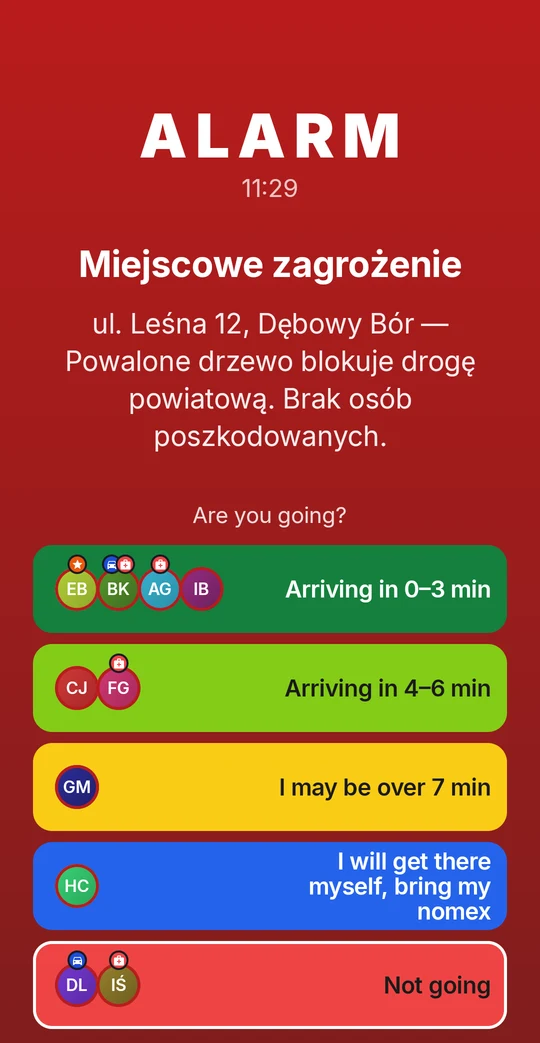
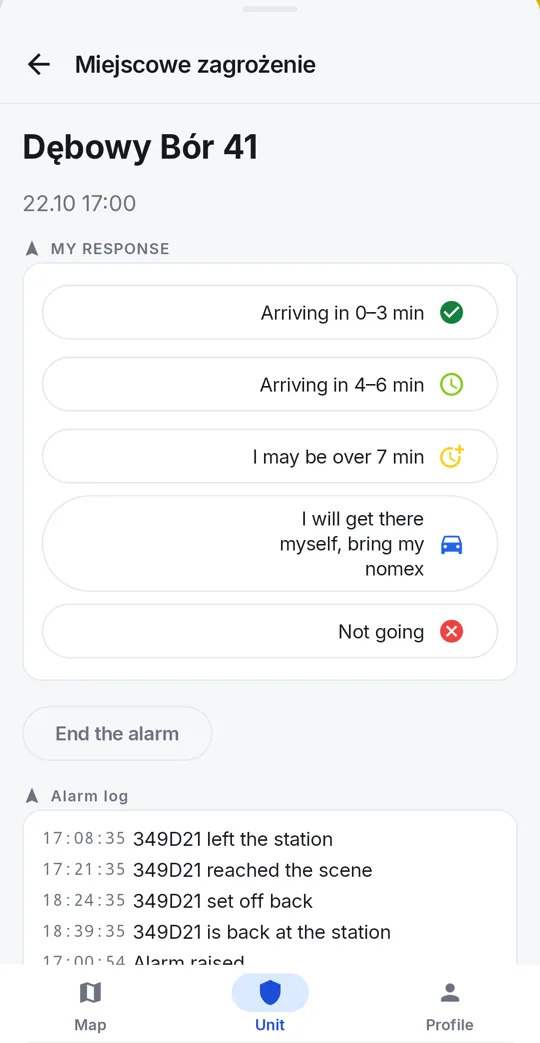
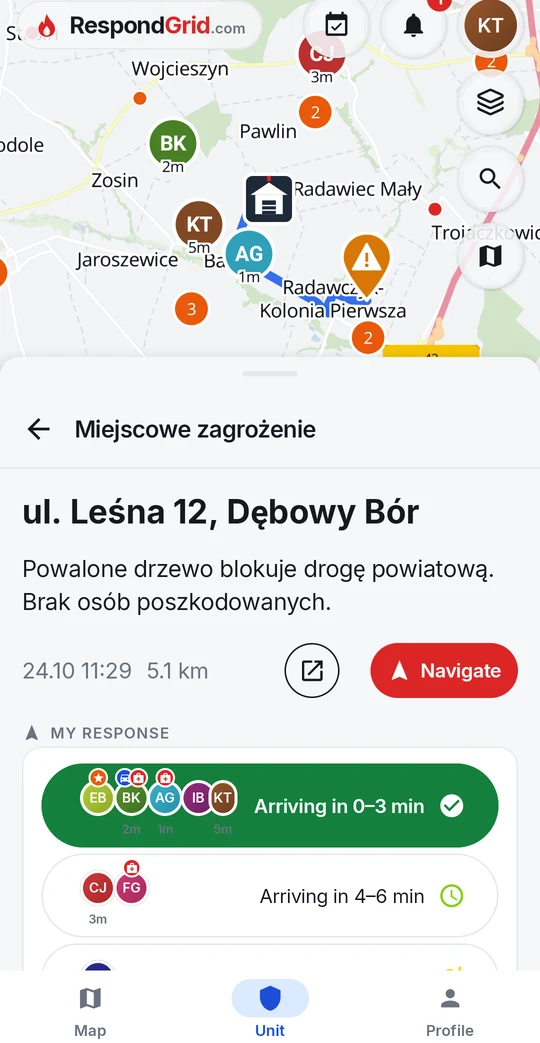
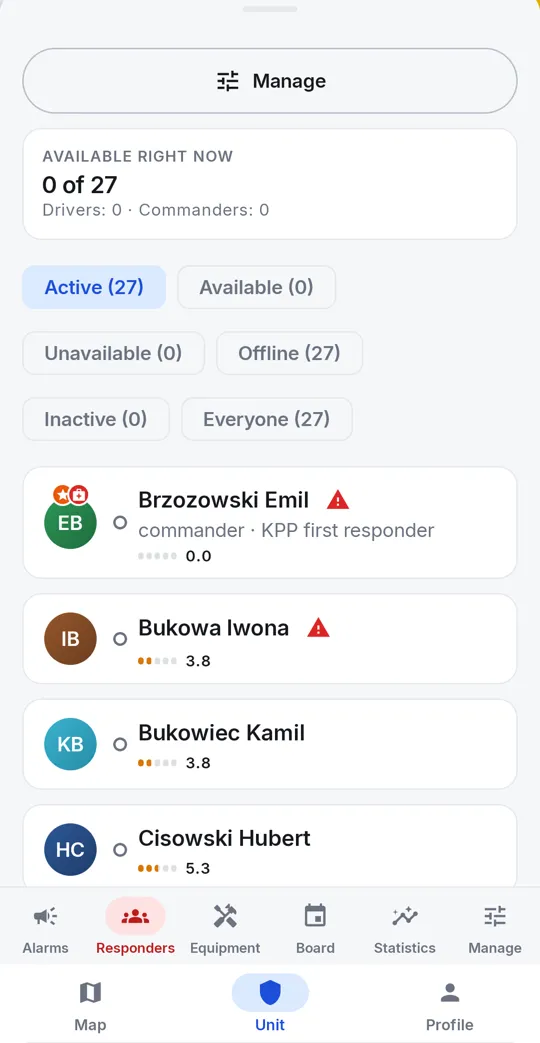
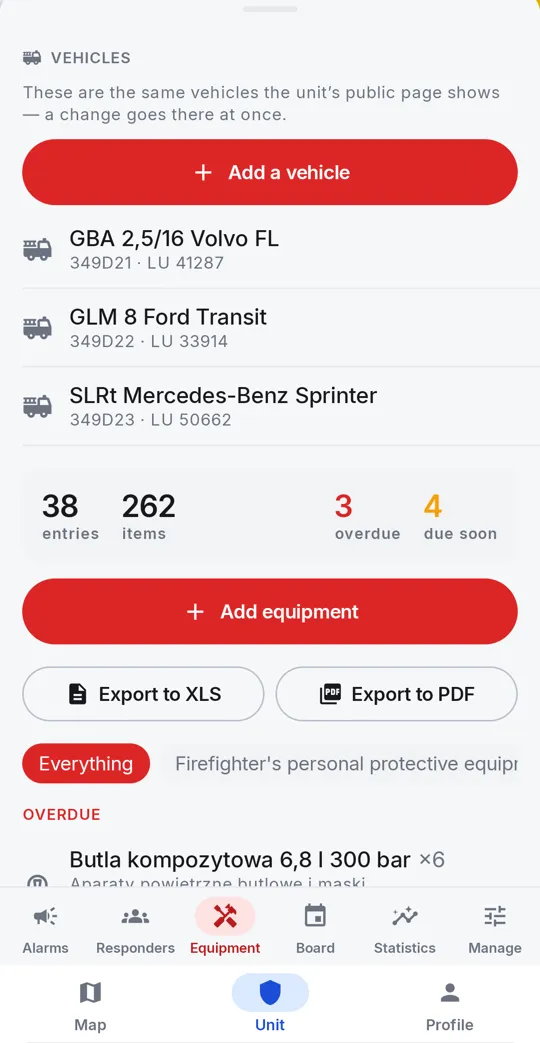
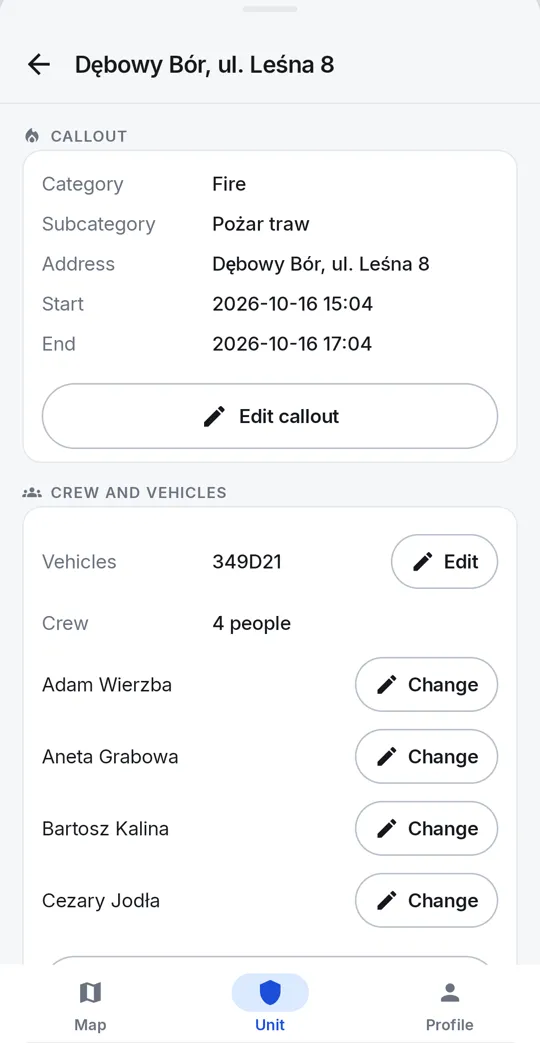
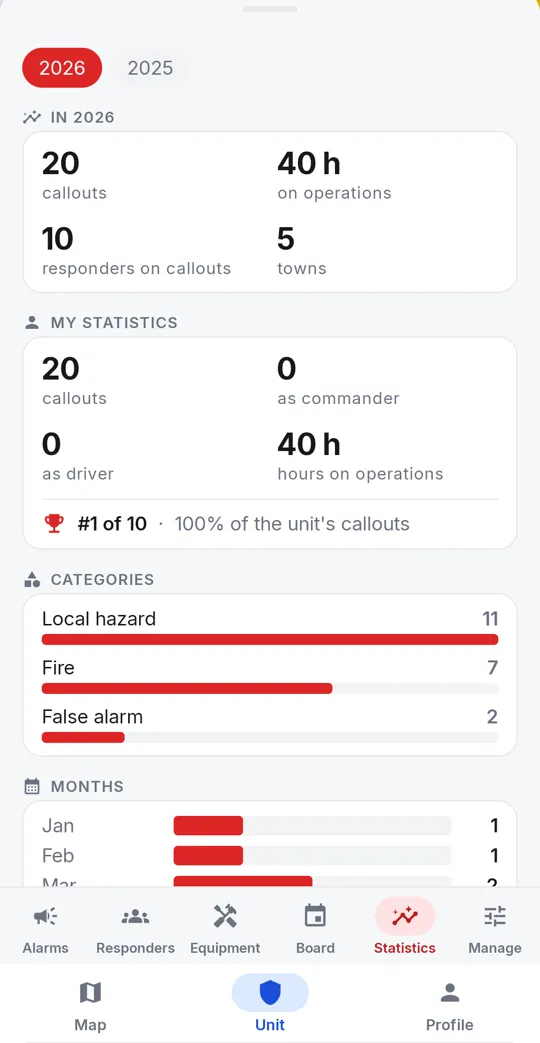
Screenshots from the demonstration unit, with invented data.
Price
Unit panel
freeroster, equipment, call-outs, the Board; no time limit
Alerting
from PLN 50 a yearalerts to phones, availability, station screen and vehicle; 3 months free
| up to 10 people | PLN 50 |
|---|---|
| up to 20 people | PLN 70 |
| up to 30 people | PLN 90 |
A unit of up to 20 people pays less than PLN 6 a month. 3 months free with the full functionality. Invoice to the organisation, payment by bank transfer.
Responders' data
- Only the unit's own data is public: name, address, vehicles, contact. Responders' personal data is not public.
- We collect location only on the way to an alert and with the responder's consent; the server deletes it on arrival.
- Availability by area is optional and off by default; only a “yes” or a “no” reaches the server.
- No ads and no cross-app tracking. We do not sell data.
- The unit remains the controller of its members' data; we process it under a data processing agreement the administrator accepts in the panel. The unit's data is stored on a server in the European Union (Frankfurt).
Privacy policy · Data processing agreement · Terms of service
Frequently asked questions
Does RespondGrid replace the dispatch system, the dispatch centre or the 112 number?
No. The dispatch system and the dispatch centre take the incident report; RespondGrid carries it to the responders' phones and collects their answers. The terms of service say outright that alerting complements, and does not replace, dispatch systems and official notification procedures.
Where does the alert come from?
Three ways. From e-Remiza: an API integration, the server polls e-Remiza itself and you connect nothing to phones. From a system that rings a phone (for example a DSP-50 with a GSM terminal): a trigger phone in the “alarm from a call” mode. From a system that sends HTTP requests: a webhook with the unit's token. An alert can also be raised by hand in the panel or in the app.
Does RespondGrid work with e-Remiza?
Yes, it is a ready API integration. The unit creates a separate service account in e-Remiza (read-only) and enters its details in the panel. The RespondGrid server polls e-Remiza about every 20 seconds and on a new call sends the alert to all responders' phones at once, with the address and the scene. The integration also imports the roster with qualifications (with a preview before saving) and shows vehicle positions on the map. RespondGrid only reads and writes nothing into e-Remiza.
Can a DSP-50 or another selective-alarm system be connected?
Yes, if the system has a GSM terminal that rings the firefighters. Add the number of the trigger phone (an old Android phone on a charger in the station, with the “alarm from a call” mode on) to that list, and the ring raises the alert on the phones of the whole unit. A call carries no address, so the alert arrives without details. Every call to that number raises the alert, so it is given only to the alarm system. A system that can send an HTTP request can be connected with a webhook. RespondGrid supplies no devices on the DSP system's side.
What is the difference between selective and simultaneous alerting?
These are the names used in DSP systems. Selective alerting calls chosen units or groups, simultaneous alerting many recipients at once, over radio, sirens and a GSM terminal. It happens on the DSP system's side. RespondGrid starts after the signal: it sends the alert to the phones of all the unit's responders at the same moment and adds the address, a one-tap “coming” answer, the travel time, a view of who is coming and availability. It does not split an alert into groups or functions; for an alert raised by hand you only choose vehicles.
Can a call-out report be sent by e-mail?
Yes. A unit's administrator or editor sends it from the call-out card, in the panel or in the app, to an address from the unit's own recipient list (for example a district command post or the municipality). The message carries the type of incident, the place, the times, the vehicles, the crew with their roles, the equipment used and notes; for a rescue group it is an action report with the outcome and the number of people helped. The sending is confirmed first and a trace stays in the call-out's history. The function is free and optional: the unit switches it on, because not every county accepts reports by e-mail.
Will the alert work on a silenced phone?
The alert has its own notification channel and lights the screen even on a locked, silenced phone, as long as the app has the permissions it needs. Delivery time depends on the network and the phone's settings and is not guaranteed; the app guides you through the setup.
How much does it cost?
The unit panel is free with no time limit. Alerting costs, gross per year: PLN 50 up to 10 people with an account, PLN 70 up to 20, PLN 90 up to 30, PLN 120 up to 60, PLN 180 up to 120 and PLN 240 above 120. People with an account are counted; device accounts and roster entries without an account are not.
Do we need a card, and is there a multi-year contract?
No. The first 3 months are free, with the full functionality and no payment details. Payment is annual, by bank transfer, against an invoice issued to the organisation.
What happens if we stop paying?
The paid functions (alerting, availability, device modes) switch off when the paid period ends, with no grace period. Nothing is deleted: the panel, the roster, equipment and call-outs keep working.
Who sees the responders' data?
Publicly, only the unit's data. The roster, departure declarations and travel times are seen by the unit's members; contact details and check-up dates by the unit's command.
Does the app track the phone's location?
Not continuously. Location is collected only after you declare “coming”, on the way and with the responder's consent, and the server deletes it on arrival. Outside an alert the phone sends no location; the optional availability by area passes only a “yes” or a “no”.
What about GDPR?
The unit is the controller of its members' data and RespondGrid processes it on its behalf under a data processing agreement (public, accepted in the panel). The details are in the privacy policy.
Who pays and who gets the invoice?
The organisation pays (an association, a unit) and the invoice is issued to its name, address and tax number. Paid services are not offered to consumers, so a chief does not pay with a personal card.
Is it only for volunteer fire brigades?
No. The portal also serves the State Fire Service, military fire services and rescue groups (mountain, water, search, canine and others), with their own incident categories, vocabulary and area of operation. An alert in a rescue group lasts two hours by default.
Can I see how it works before I set up my own unit's panel?
Yes. A demonstration account opens the full panel on invented data. It saves no changes, so you cannot break anything.
Units by voivodeship
- dolnośląskie
- kujawsko-pomorskie
- lubelskie
- lubuskie
- mazowieckie
- małopolskie
- opolskie
- podkarpackie
- podlaskie
- pomorskie
- warmińsko-mazurskie
- wielkopolskie
- zachodniopomorskie
- łódzkie
- śląskie
- świętokrzyskie
The unit panel is free, and alerting is free for 3 months.
Data from public registers: KRS, TERYT and OpenStreetMap.